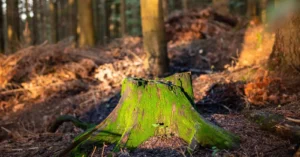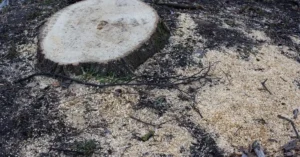
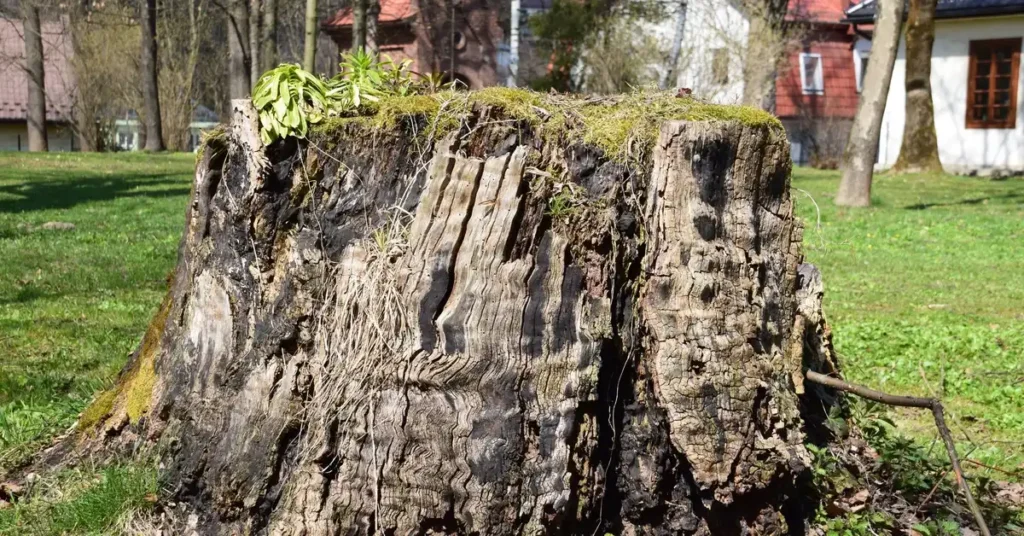
In most cases, no, you do not need council permission to remove or grind a stump that is already there. The permission question in Ireland is almost always about felling a living tree, not about what you do with the stump afterwards. The exceptions are trees protected by a Tree Preservation Order, trees covered by a planning condition on your estate, and anything growing on council land such as a footpath or green area, where different rules apply.
Why this question gets confused so often
We get asked this a lot, usually from someone who has just had a tree taken down by a previous owner, a storm, or another contractor, and now wants the stump gone before they landscape or lay a patio. The confusion comes from the fact that felling a tree in Ireland can, in certain circumstances, need a licence or planning permission, and people assume the same red tape must apply to the stump. It generally doesn’t. Once a tree is legally down, the stump left behind is just wood and roots in the ground. Dublin City Council, or whichever local authority covers your area, is not concerned with you grinding out a stump in your own garden.
Where it gets more complicated is when the tree was never properly felled in the first place, or when it was protected. That is the bit worth checking before you book the work, not because stump grinding itself is regulated, but because it tells you whether there is an outstanding issue with the tree that led to the stump.
Tree Preservation Orders and protected trees
Some mature trees in Dublin, particularly in older established suburbs like Dundrum, Rathfarnham, Clontarf and Dun Laoghaire, are covered by a Tree Preservation Order. A TPO protects the living tree, not the stump. So if the tree is already gone and you are only dealing with what’s left in the ground, the TPO itself isn’t the thing to worry about. What matters is confirming the tree was felled with the proper consent at the time. If you’re not sure of the history of a stump on a property you’ve just bought, a quick call to your local authority’s planning section will tell you whether that tree was ever subject to a TPO, and whether felling permission was granted. This is just due diligence, not a requirement for the stump work itself.
Trees on new housing estates and planning conditions
A lot of Dublin’s newer estates, especially out towards Swords and parts of south Dublin, had tree planting written into the original planning permission as a condition, often to screen boundaries or soften the streetscape. If a tree covered by one of those conditions was removed and you’re now left with the stump, the local authority may expect a replacement tree to be planted rather than the space simply paved over. Again, this is a question about the tree and the estate’s planning history, not about stump removal itself, but it’s worth knowing before you grind the stump and pour a patio slab over it.
Stumps on council land, verges and footpaths
This is the one area where you genuinely do need to go through the council first. If the stump is on a public footpath, a green area owned by the local authority, or a verge outside your boundary, that is not your tree, and not your call to make alone. We occasionally get calls from homeowners wanting a stump gone from the verge outside their house because it’s an eyesore or a trip hazard. The right move there is to report it to the council, who will usually deal with it themselves or give permission for it to be removed, often because they need to manage liability and check what’s underneath (ducting, cabling, drainage) before any grinding goes near it.
What this means for the job itself
For the vast majority of jobs we do, stump grinding in a back garden, front garden, or along a private boundary, there is no permission step at all. You ring us, we have a look (or you send photos), we tell you what size grinder the access allows for, and we get it done. The things that actually change the cost and approach are practical, not bureaucratic:
- Access: whether the grinder can get through a side gate or has to be carried over a wall
- Stump size and species: an old sycamore or beech stump takes a lot longer than a young birch
- Root spread: stumps near a patio, driveway or wall often have roots running under the surface, which slows the grind and needs more care
- What’s underneath: close to a house, we always check for drains, oil lines or ducting before grinding deep
- Depth needed: a stump you plan to turf over needs grinding deeper than one you’re just tidying up
None of that requires council sign-off. It’s the practical side of the job, and it’s the part we talk through with every customer before we quote.
Our honest advice before you book
If the stump is in your own garden and the tree is already down, don’t let planning worries hold you up, there’s almost certainly nothing to clear with the council. If you’ve bought a property with a large stump and you’re not sure how the original tree came down, it’s worth a quick check with your local authority’s planning or parks department, just so you’re not the one caught out later if a condition was attached to that tree. And if the stump in question is outside your boundary on a footpath or green area, that one genuinely isn’t yours to remove without talking to the council first.
We’ve been removing and grinding stumps across Dublin for over 28 years, from small garden jobs in Terenure and Glasnevin to large old stumps left behind after storm damage in Stillorgan and Drumcondra, and the planning question comes up far less often than people expect. Most of the time the real work is getting the grinder to the stump and dealing with what’s under the ground, not paperwork.
If you’ve got a stump you want gone and you’re not sure where you stand, get in touch through our contact page and we’ll talk it through, or have a look at our stump services to see the full range of what we handle, from a single garden stump to a full clearance.
Frequently Asked Questions
Do I need planning permission to grind a stump in my own garden?
No. Planning rules in Ireland apply to felling living trees in certain circumstances, not to removing a stump that’s already in the ground. If the tree is down, grinding the stump is a practical job, not a planning matter.
What if I don’t know whether the original tree had a Tree Preservation Order?
Contact your local authority’s planning department and ask them to check the address. It’s a quick call and it settles the question, especially useful if you’ve recently bought the house and don’t know the tree’s history.
Can I remove a stump on the footpath outside my house?
Not without checking with the council first. Trees and stumps on public footpaths, verges and green areas belong to the local authority, and there may be services like ducting or drainage underneath that need to be checked before any grinding work starts.
Does stump grinding damage nearby drains or foundations?
It can if it’s done carelessly, which is why we always ask about nearby drains, oil lines and walls before we start. A stump close to the house needs a more careful approach than one standing in open lawn.
Will grinding the stump stop roots causing problems later?
Grinding removes the visible stump and the bulk of the structural roots near the surface, which is usually enough to stop regrowth and let you landscape over the area. Very large, established root systems can occasionally still send up the odd shoot, but that’s rare once the main stump is properly ground out.
Should I remove the stump myself to save money?
For a small, young stump, maybe. For anything mature, or anything near a wall, path or drain, we’d steer you away from DIY. Hired grinders are awkward on uneven Dublin gardens, and hitting a buried pipe or cable costs a lot more to fix than the job would have cost in the first place.