If a storm has brought a tree down or split one open in your garden, the short version is this: get everyone away from it, do not touch it yourself, and get a professional out to assess it before you decide whether it needs taking down fully or can be made safe and left. Storm-damaged trees are often more dangerous after the event than during it, because the wood is under tension in ways you can’t see from the ground. We’ve been doing emergency call-outs across Dublin for over 28 years, and the jobs that go wrong are almost always the ones where someone tried to deal with it themselves first.
What storms actually do to Dublin’s trees
Dublin doesn’t get hit as hard as the west coast, but we still see real damage every winter, and the pattern is fairly consistent. Exposed gardens in Clontarf and Dun Laoghaire take the brunt of it, with salt-laden wind off the coast weakening the canopy over years before a storm finally finishes the job. Inland, in places like Rathfarnham, Dundrum and Terenure, the issue is usually older, larger trees planted decades ago in gardens that were never meant to hold them at full maturity. Shallow root plates in heavy Dublin clay are the real culprit. The soil holds water after heavy rain, the ground softens, and a tree that’s stood for sixty years can go over in one night of strong gusts because the roots simply lose their grip.
Ash is a particular worry at the moment. Ash dieback has left a lot of mature ash trees across Dublin brittle and structurally compromised, even when they still look fairly green and healthy from the road. Add wind loading to that and branches or whole stems can fail with very little warning. Leylandii hedges are the other recurring one, especially where they’ve been let grow tall and dense without proper thinning. A solid wall of leylandii acts like a sail in a storm, and we’re regularly called out to gardens where a section of hedge has simply toppled onto a fence or shed.
What to do in the first 24 hours
Stay well back. Keep children and pets away from the area, especially if there’s a branch hanging or a trunk leaning against another tree or a structure, what we’d call a “widow maker” in the trade. It’s unpredictable and it can come down without any further wind at all. Don’t attempt to cut anything yourself, even if it looks small enough to manage with a bow saw. Storm-stressed timber behaves differently to timber you’d cut in normal conditions, and we see more chainsaw injuries from amateur storm clean-up than almost any other cause. Photograph the damage for your insurer before anything is moved, note whether the tree has hit a boundary wall, car, shed or neighbouring property, and contact your insurance company early, because most home policies do cover storm damage to buildings even if they don’t cover the tree itself. Then get a tree surgeon out to assess it properly.
When it’s a genuine emergency and when it can wait
Not every storm-damaged tree needs dealing with that same day, and we’d always rather be honest about that than push an emergency call-out where one isn’t needed. A tree that’s come down cleanly onto open lawn, away from the house, a shed, a car or a boundary with the neighbours, can usually wait a day or two for a proper assessment during normal hours. What genuinely can’t wait is anything leaning on a building or power line, anything blocking a road or footpath, a split trunk still partially attached and under tension, or a large hanging branch directly over a path, driveway or patio that’s in regular use. If you’re not sure which category your situation falls into, it’s always worth a call rather than guessing. We offer emergency tree removal across Dublin for exactly this kind of situation.
Don’t forget the stump
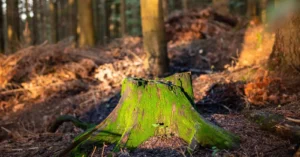
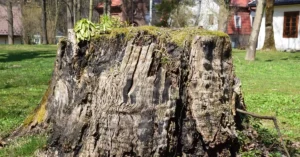
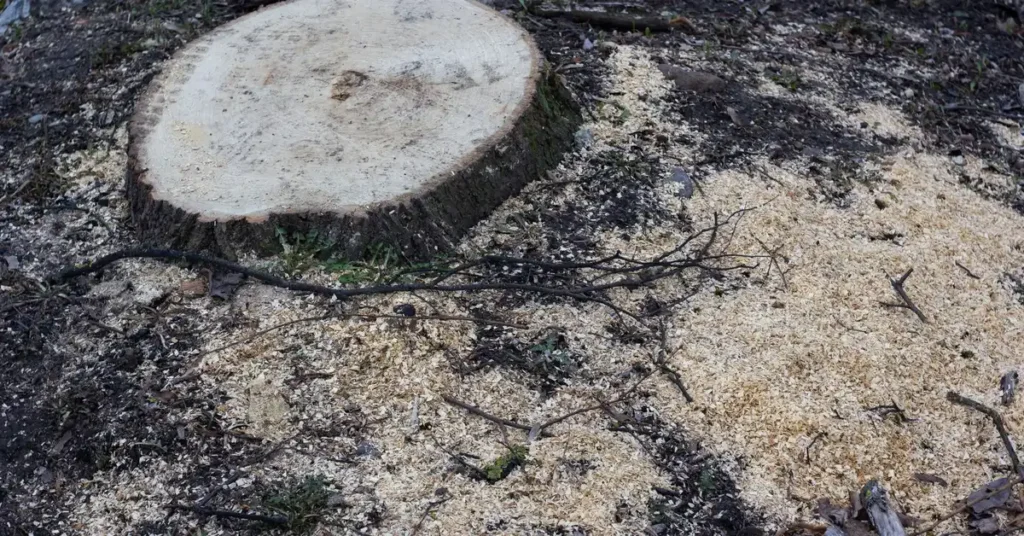
Once the fallen or dangerous part of the tree has been dealt with, you’re usually left with a stump, and often a fairly ugly, torn-out one at that, since storm damage rarely snaps a tree cleanly at ground level the way a planned felling does. These stumps are frequently split, partially uprooted, and sitting at an angle with roots exposed across the lawn or a border. Leaving it isn’t just a cosmetic issue. A storm-torn stump can be a trip hazard, it will usually throw up suckering regrowth the following spring, and if it’s near a patio, driveway or shed foundation the remaining root system can keep causing slow movement in the ground for years. Grinding it out while the area is already disturbed is almost always the better time to do it, rather than leaving it and relandscaping around it later. Have a look at our stump services page for how we approach this, or our dedicated stump grinding service if you already know grinding is what you want rather than full root removal.
What affects the cost of emergency storm work
We won’t quote a figure here because every storm job is genuinely different, but these are the things that move the price up or down in our experience:
- Access: a tree down in a tight back garden behind a terraced house in Drumcondra or Rathmines takes longer to deal with than one in an open front garden with vehicle access.
- What it’s resting on: a tree leaning on a shed, wall or another tree needs careful, often roped, dismantling rather than a straightforward felling cut.
- Size and species: a mature sycamore or beech is a different job to a smaller ornamental or a fallen section of hedge.
- Timing: genuine out-of-hours emergencies, where it’s dangerous or blocking access, cost more than work booked in for the following week.
- Stump removal: grinding the stump out at the same visit is usually more efficient than organising a separate call-out later.
- Waste removal: whether you want the timber and brash taken away or are happy to keep logs for firewood changes the job too.
The only way to get an honest figure for your own garden is to have someone look at it, which is what we’d always recommend over guessing from a photo.
Planning permission and protected trees
A lot of homeowners assume storm damage means they can do whatever they like to a tree, but if the tree is covered by a Tree Preservation Order or sits within a designated conservation area, different rules can still apply even to dead or dangerous trees. The position varies and can change, so always check directly with your local authority (Dublin City Council, Dún Laoghaire-Rathdown, South Dublin or Fingal, depending on where you are) before felling anything that might be protected, particularly if it’s not an immediate safety emergency. Genuine emergencies where a tree is an immediate danger are generally treated differently, but it’s still worth a quick check if you have time.
Getting help this winter
We’ve been dealing with storm call-outs across Dublin city and the surrounding areas, from Swords down to Dundrum and out to Dun Laoghaire, for over 28 years, so we’ve a fairly good sense of which gardens and which trees give the most trouble when the weather turns. If you’ve storm damage to deal with, or you want a tree assessed before the next spell of bad weather rather than after, get in touch through our contact page and we’ll talk you through it honestly, including whether it’s urgent or can wait.
Frequently Asked Questions
Is storm damage to trees covered by home insurance in Ireland?
Most standard home insurance policies cover storm damage to buildings, fences and other structures caused by a falling tree, but cover for the tree itself, or for clearing a tree that hasn’t damaged anything, varies by policy. Check your specific policy wording and contact your insurer directly before arranging work, and keep photos of the damage.
How quickly can you get out to an emergency job in Dublin?
We prioritise genuine emergencies, meaning trees that are dangerous, blocking access or resting on a structure, and aim to get to those as fast as we can. Less urgent damage, like a tree down on open lawn, is usually booked in within normal working days. Call us and describe the situation honestly and we’ll tell you where it sits.
Can I leave a storm-damaged stump and deal with it later?
You can, but a torn or split stump left from storm damage tends to be unstable, can produce vigorous regrowth the following season, and is often easier to grind out while the ground is already disturbed. If it’s near a path, patio or driveway, we’d generally recommend dealing with it at the same time as the main clean-up.
Do I need planning permission to remove a storm-damaged tree?
It depends on whether the tree is protected by a Tree Preservation Order or is in a designated conservation area. The rules can change, so confirm the current position with your local authority before felling, unless the tree is an immediate danger, in which case urgent safety work is generally treated differently.
What’s the difference between emergency tree removal and normal felling?
Emergency work deals with a tree that’s already failed, partially fallen, or is an immediate danger, often under time pressure and sometimes in poor weather. Planned tree felling is scheduled, assessed in advance, and carried out in controlled conditions, which is generally safer and more cost-effective where there’s no immediate risk.
Why does ash dieback matter for storm risk in Dublin gardens?
Ash dieback weakens the internal wood structure of ash trees even when the canopy still looks reasonably healthy, making branches and stems more likely to fail under wind loading. If you have a mature ash on your property, it’s worth having it assessed before storm season rather than waiting for damage to appear.